Tungsten & Tungsten Alloys
Materials with Unique Properties
Our tungsten materials are perfectly tailored to your industrial requirements
Our tungsten materials are perfectly tailored to your industrial requirements
Tungsten is more than just a metal – it is a key material for high-performance industries. With its exceptional hardness and density and the highest melting point of all metals, it ensures reliability and durability in demanding applications. In sectors such as electronics, toolmaking and aerospace, tungsten enables processes that have to withstand extreme conditions.
At Wolfram Industrie, we combine decades of expertise with innovative strength and modern metalworking technologies to develop sustainable tungsten solutions. Through certified processes, recycling and conflict-free sourcing, we guarantee high product quality and security of supply – worldwide.
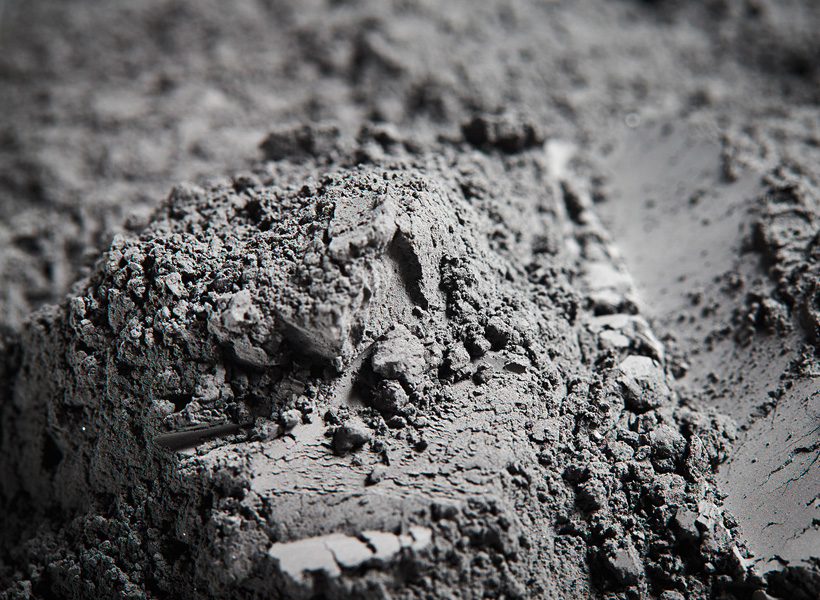
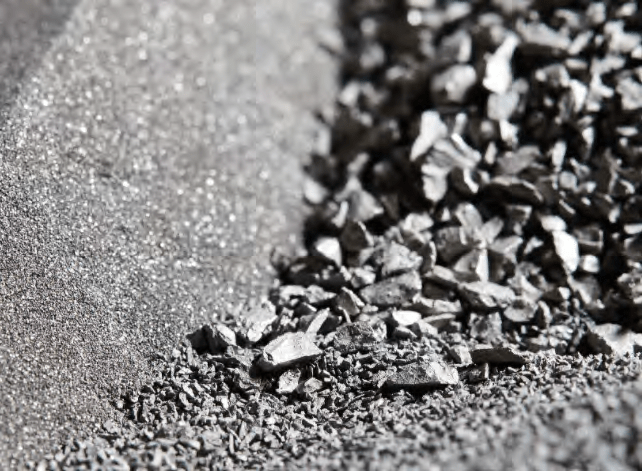
Tungsten (German: Wolfram) is an extremely resilient heavy metal characterised by its exceptional hardness, high density and the highest melting point of all metals. These properties make it one of the most sought-after and most durable materials in modern industry. The lustrous grey metal is considered indispensable wherever conditions call for heat-resistant and wear-resistant materials.
Tungsten is mainly extracted from tungsten ores, the most important of which are scheelite (calcium tungstate) and wolframite (iron manganese tungstate). The ores contain tungsten only in low concentrations, which is why they undergo complex chemical and mechanical processing to extract the pure metal.
The Importance of Tungsten and Tungsten Alloys for Various Industries
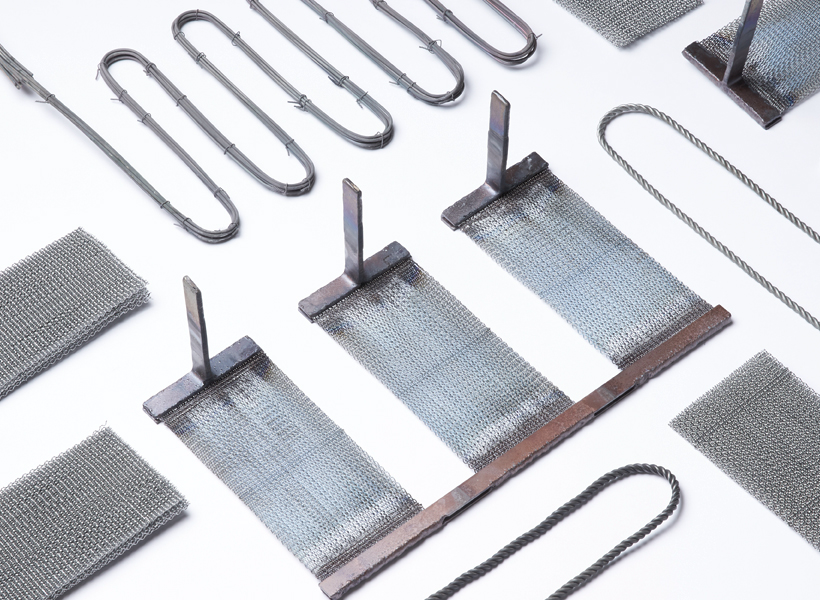
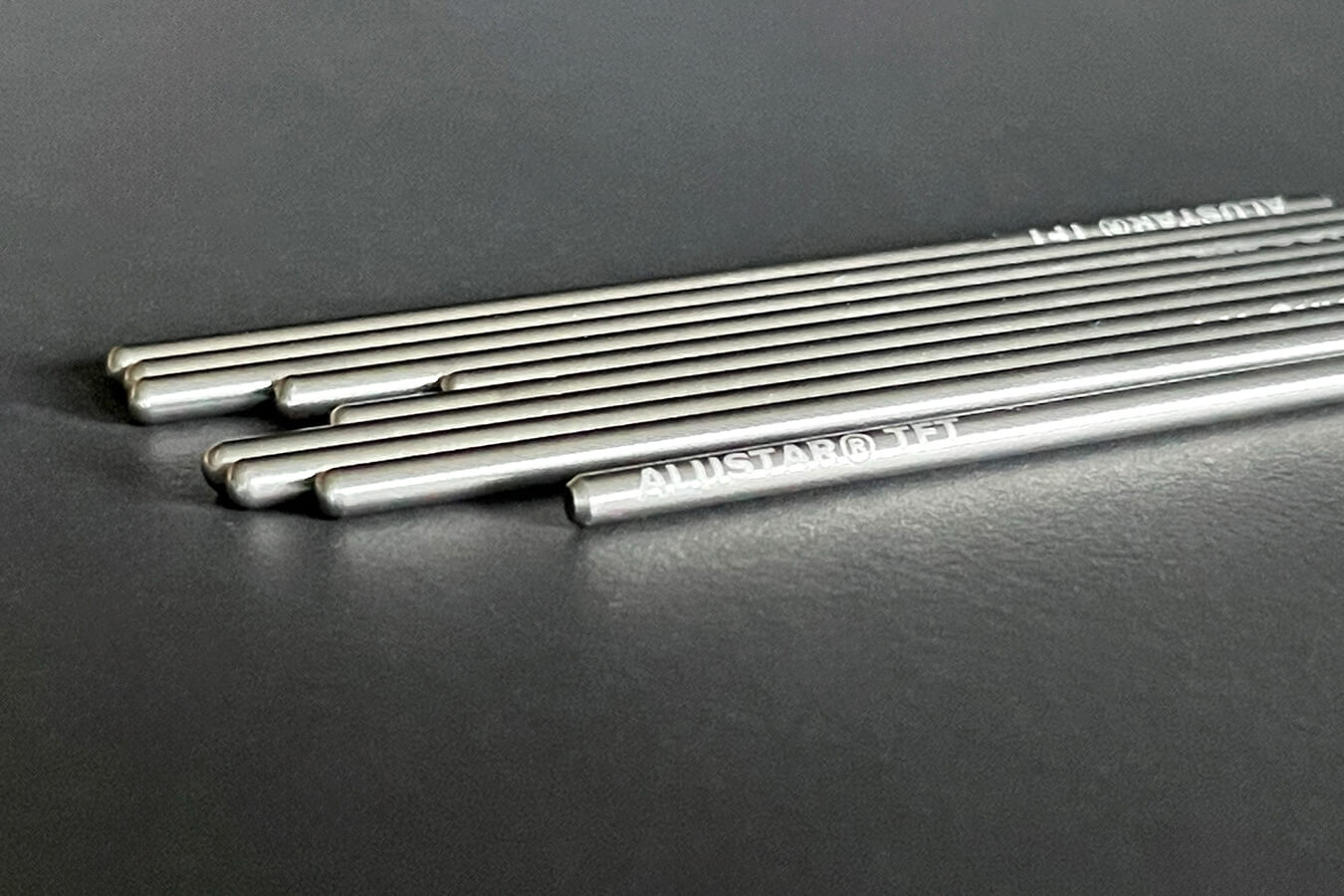
Tungsten and its alloys are used in specialised sectors that place very high demands on material properties. In welding technology, TIG electrodes guarantee stable welds on high-purity joints such as titanium or aluminium alloys. Our products WS2, INOSTAR® and ALUSTAR® are indispensable in aerospace and medical technology thanks to their heat and wear resistance. Owing to their longevity and resilience, they offer reliable solutions for high-temperature processes.
Specialised products such as TUNGSTIT® and TRIAMET® are also used in electronics, toolmaking and the pharmaceutical industry. Customisable conductivity and density are important in strictly regulated production environments, such as those required for sterilisation and the manufacture of pharmaceutical equipment.
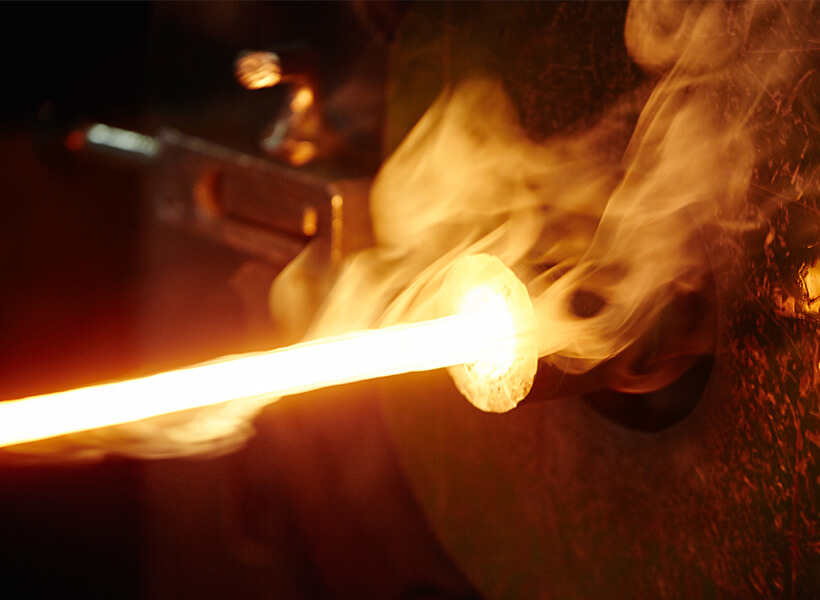
The unique physical properties of tungsten – such as its exceptional hardness and resistance – provide a reliable basis for industrial processes that have to withstand very high loads.
Melting point: 3,422 °C – the highest of all metals
Boiling point: 5,900 °C – comparable to the surface of the sun
Density: 19.25 g/cm³ – one of the highest among metals
Coefficient of thermal expansion: 4.5 x 10⁻⁶ K⁻1 – the lowest among metals
Electrical conductivity: 18.5 MS/m – equivalent to 31 per cent of that of copper; ideal for high-performance circuits
These physical properties of tungsten have a decisive influence on its mechanical load-bearing capacity:
Hardness: 300–500 HV10 – particularly wear-resistant
Mechanical strength: tensile strength between 1,500 and 2,200 MPa (diameter 1.0–1.99 mm) – high resistance to deformation
Rigidity: modulus of elasticity of approx. 400 GPa – dimensionally stable even under very high loads
Tungsten has exceptional strength, which makes it very difficult to deform. It also remains dimensionally stable even under large temperature fluctuations. Its low coefficient of thermal expansion gives the heavy metal exceptional resistance when exposed to heat. Thanks to this combination of strength and temperature resistance, tungsten proves highly reliable in demanding applications.
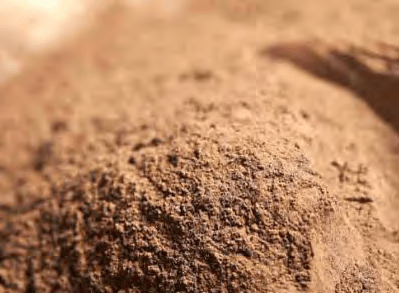
Tungsten is extremely resistant chemically. At room temperature it remains stable in contact with air and barely corrodes. Only at higher temperatures (approx. 600 °C) does tungsten begin to react to form tungsten(VI) oxide (WO₃, also known as “tungstic ochre”). This reaction alters its surface properties and leads to material loss.
Most acids and alkalis barely attack tungsten metal. Even aggressive mineral acids such as hydrofluoric acid and aqua regia affect it only slowly. In a mixture of nitric and hydrofluoric acid, however, it dissolves more quickly. This makes it ideally suited for use in chemical environments in which conventional metals fail.
The unique physical properties of tungsten – such as its exceptional hardness and resistance – provide a reliable basis for industrial processes that have to withstand very high loads.
| Symbol | W |
|---|---|
| CAS number | 7440-33-7 |
| Atomic number | 74 |
| Atomic weight | 183,85 |
| Lattice type | body-centred cubic |
| Density (at 20°C) | 19.25 g/cm³ |
| Melting point | 3425 °C/3698 K |
| Specific heat (at 20°C) | 138 J/(kg•K) |
| Linear coefficient of thermal expansion (at 20°C) | 4,5 • 10⁻6 m/(m•K) |
| Modulus of elasticity (at 20°C) | 407 GPa |
| Shear modulus | 156 GPa |
| Tensile strength | 750-4700* N/mm² |
| Thermal conductivity (at 20°C) | 170 W/(m • K) |
| Electrical conductivity (at 20°C) | 0.181 [1/(µΩ-cm)] |
| Specific electrical resistance | 0.055 Ωmm²/m |
| Hardness | 300-520* HV10 |
| Agent | Condition | Behaviour |
|---|---|---|
| Water | cold/hot | resistant |
| Hydrochloric acid HCl | cold | resistant |
| hot | slight attack | |
| Sulphuric acid H2SO4 | cold | resistant |
| hot | slight attack | |
| Nitric acid HNO3 | cold | resistant |
| hot | slight attack | |
| Hydrofluoric acid, pure HF | cold/hot | resistant |
| Aqua regia | cold | resistant |
| hot | severe attack | |
| Caustic soda, molten | in air | severe attack |
| Air and oxygen | up to 400°C | resistant |
| above 400°C | Oxidation | |
| above 850°C | Sublimation | |
| Hydrogen | at all temperatures | resistant |
| Nitrogen | up to 2100°C | resistant |
| above 2200°C | Nitriding | |
| Carbon dioxide CO2 | above 1200°C | Oxidation |
| Sulphur dioxide SO2 | above 700°C | Oxidation |
| Density (depending on the degree of deformation) | 18.0–19.25 g/cm³ | |
| Strength | for diameters of 1.0–1.99 mm | 1,500–2,200 MPa |
| for diameters of 2.0–3.2 mm | 1,300–2,000 MPa | |
| Elongation | <6 % | |
| Recrystallisation properties | Start of recrystallisation | approx. 1,150 °C |
| Full recrystallisation | approx. 1,350 °C within 1 hour | |
| Specific electrical resistance | 300 K | 5.65 µΩcm |
| 500 K | 10.65 µΩcm | |
| 1000 K | 24.93 µΩcm | |
| 1500 K | 40.36 µΩcm | |
| 2000 K | 56.67 µΩcm | |
| 2500 K | 73.91 µΩcm | |
| 3000 K | 92.04 µΩcm | |
| 3500 K | 111.10 µΩcm | |
| Thermal conductivity | at 293 K | 174 W/m·K |
| Temperature coefficient | 273–373 K | 4,5 · 10-6 K-1 |
| Surface | available ground, drawn (black/cleaned), hammered, turned, milled and eroded | |
| Heat treatment | available annealed or unannealed |
Tungsten – physical and mechanical properties
Recrystallisation properties:
Specific electrical resistance:
Thermal conductivity at 293 K / 174 W/m·K
Temperature coefficient: 273–373 K 4.5 · 10-6 K-1
Surface: available ground, drawn (black/cleaned), hammered, turned, milled and eroded
Heat treatment: available annealed or unannealed
Tungsten Compared with Other Metals
Tungsten stands out thanks to its exceptional properties. Its melting point of 3,422 degrees Celsius makes it far superior to metals such as steel (1,500 °C) and titanium (1,668 °C). This enormous stability is due to the strong bonds in its atomic structure. Tungsten metal is often used as a substitute for lead, for example for protection against radioactive radiation. Its suitability as a shielding material is reflected in its high atomic number of 74 in the periodic table, as the shielding effect of metals increases with rising atomic number and material density.
With an atomic mass of 183.84 u, it is one of the heaviest metals. It is ideal for special operating conditions, such as in heating elements and tungsten plates, which operate reliably in electronics and aviation at high temperatures and under mechanical loads.
Tungsten alloys are used wherever components are exposed to unusual conditions, to guarantee resistance to heat, radiation and pressure:
Tungsten alloys are even used in the manufacture of jewellery because they are extremely robust and scratch-resistant – but that is an entirely different field of application.
Advantages of Tungsten Alloys over Other Materials
Tungsten alloys based on tungsten carbide offer greater resistance to heat and wear than steel, titanium or molybdenum alloys. Compared with steel, tungsten alloys have a significantly higher melting point and withstand temperatures that steel alloys cannot cope with. Although titanium alloys offer corrosion resistance and low weight, they cannot bear mechanical loads as well as tungsten.
Compared with molybdenum alloys, tungsten shows superior dimensional stability in high-temperature environments, making it irreplaceable for special applications in electronics, toolmaking and aviation.
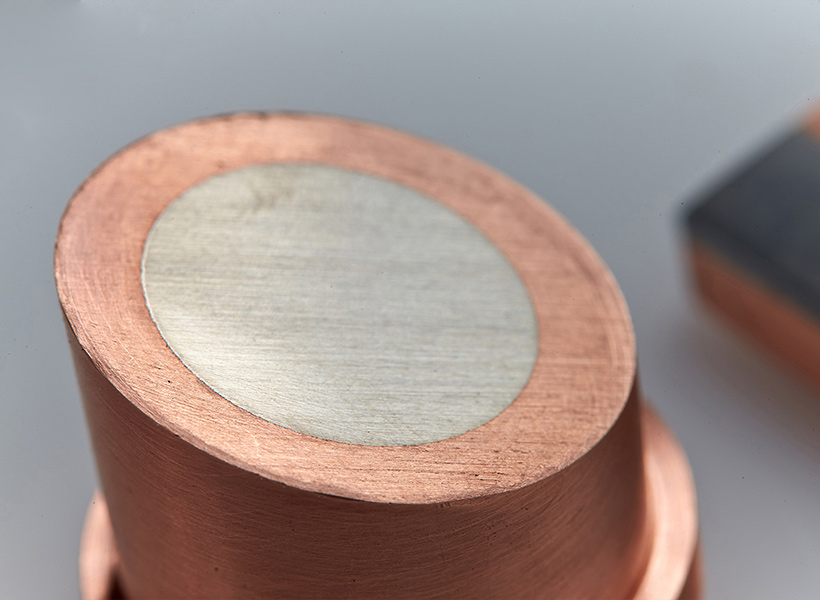
One example of an innovative tungsten alloy is TUNGSTIT®. This composite material, produced by powder metallurgy, combines the heat resistance of tungsten with the high electrical conductivity of copper. The combination results in significantly higher arc erosion resistance than pure copper – ideal for contacts and electrodes.
The longevity and wear resistance of tungsten alloys reduce maintenance effort and costs. This enables considerable savings and greater energy efficiency, particularly in high-performance applications such as aviation or toolmaking.
Tungsten is difficult to machine owing to its brittleness, strength and high melting point. This combination makes cutting, milling and turning pure tungsten particularly demanding, as conventional tools wear quickly under the high load.
To machine tungsten, we use high-strength cutting tools made of tungsten carbide or CBN, which ensure a longer tool life and enable precise machining results. CNC technologies are used to machine even complex geometries accurately. High-pressure water-based coolants reduce friction and extend tool life. The combination of optimised tools and coolants makes it possible to work economically even with difficult materials such as tungsten and tungsten alloys.
Best Practices at Wolfram Industrie for High Quality
We develop and produce high-quality welding electrodes that are specially designed for joining under demanding conditions. Thanks to the special properties of tungsten, these electrodes help to create stable and durable joints – even under strongly fluctuating temperatures.
Our production starts as early as the processing of the tungsten powder, which enables us to respond specifically to customer requirements. This approach makes it easier for us to select the right material for each application and gives us more scope to develop solutions together with our customers that are perfectly suited to the task at hand. Our product quality rests on three components: people, experience and time. Thanks to the knowledge built up over many decades and the specialist experience of our employees, we achieve finer microstructures than industrial standard values would lead one to expect. This is how we achieve longer-lasting applications.
Sebastian Freiherr von Cetto | Co-owner, Wolfram Industrie
Tungsten is a valuable metal whose recycling both conserves resources and reduces the consumption of raw materials. We rely on sustainable processes and conflict-free material sourcing to reduce the environmental impact of conventional tungsten extraction. The negative effects are continuously reduced through the further development of recycling methods in cooperation with our suppliers.
Recycling is an integral part of our production and ensures efficient use of resources. With recycling electrodes, companies reduce their environmental impact while increasing their cost efficiency. Wolfram Industrie also offers an electrode regrinding service that extends the service life of the electrodes and thus saves even more raw materials.
Compared with less recyclable metals such as aluminium or titanium, tungsten therefore offers significant environmental benefits and helps to minimise the environmental impact of material sourcing.
Environmentally Friendly Aspects of Tungsten Production
At Wolfram Industrie, metals are sourced in powder form and conflict-free, in accordance with EU Regulation 2017/821. We follow the OECD guidelines for the responsible handling of raw materials and verify that sources are both secure and sustainable. In addition, we regularly evaluate new ways of reducing our ecological footprint in order to make our entire production process even more environmentally friendly. Our production guarantees environmentally compatible processing methods and compliance with international human rights standards.
Our responsibility for the environment goes beyond recycling and sourcing:
“Produced locally, consumed locally” is our approach. We prefer to source machines and spare parts for repairs from companies in the region. Close cooperation on site strengthens small and medium-sized enterprises and reduces our CO₂ footprint thanks to short transport routes.
We also rely on responsibility and transparency when sourcing difficult raw materials. We obtain these materials through our stable, long-established network, which guarantees transparency and ethically sound procurement processes. While tungsten is sourced globally because of where it occurs naturally, our suppliers are based regionally. This enables us to maintain high overall standards in the quality of the starting material and in sustainability through responsible sourcing.
Tungsten prices fluctuate considerably due to several factors. The most important include global demand in high-tech industries such as electronics, aviation and medical technology, as well as geopolitical developments and trade conditions. In particular, China’s influence as one of the largest producers and exporters of tungsten has a strong impact on market availability. Raw material shortages and trade restrictions also contribute to these price fluctuations. The tungsten market is expected to grow by more than 8 per cent in the coming years, with Asia-Pacific being the largest market region.
We are able to keep our prices stable in the long term because we specifically offset price fluctuations with this combination:
This long-term resourcing strategy gives our customers financial predictability.
Secure Sourcing and Strategies for a Reliable Supply at Wolfram Industrie
Through certified procurement processes, Wolfram Industrie ensures that the highest standards of quality and sustainability are met. Our supply chain – from development and manufacturing through to the processing and distribution of tungsten and tungsten alloys – is certified to ISO 9001:2015. This allows us to provide consistently high quality and the continuous availability of our tungsten products.
To avoid bottlenecks, we rely on long-term partnerships with competent suppliers and efficient inventory management. Sufficient storage capacity enables us to maintain material availability even in the event of unforeseen disruptions. For every customer requirement, a batch starting from the powder stage is always available on call. Our procurement strategies also take into account potential supply risks such as delays at the Panama Canal or other logistical challenges. These measures minimise the risk of supply failures and strengthen our customers’ confidence in a stable global supply.
Tungsten and tungsten alloys not only offer exceptional properties such as heat resistance and strength. They also allow consistent quality in product manufacturing, which we safeguard with strict testing procedures and certifications. Combining this with decades of specialist knowledge and detail-conscious manufacturing methods, we, as a development and production company, guarantee reliable material performance, even under extreme operating conditions.
In view of volatile raw material prices, Wolfram Industrie relies on a conservative procurement policy, sufficient storage capacity and long-term cooperation with regional partner companies to ensure stable prices and support our customers’ financial planning. Wherever possible, we rely on secure and sustainable sourcing of raw materials. Through recycling and the use of conflict-free materials, we reduce the ecological footprint of companies that depend on tungsten.
Reliable supply chains and our technical expertise from 4 generations of tungsten production enable us to master every challenge in the manufacture and machining of tungsten metal. Tungsten remains the optimum choice for applications that place unusual demands on material resistance, sustainability and long-term availability at realistic prices.